
What CPG Brands, Suppliers, and Distributors Should Take Away from Beverage Forum 2026
May 6, 2026
by
Dave Laszczak
TL;DR: Beverage Forum 2026 made one thing clear: functional has stopped being a flavor and started being the operating logic of modern beverage CPG. Brands need to lead with outcomes, not ingredients. Suppliers need to anticipate where ingredient and format demand is headed. Distributors are filtering harder than ever and "functional" alone won't earn truck space.
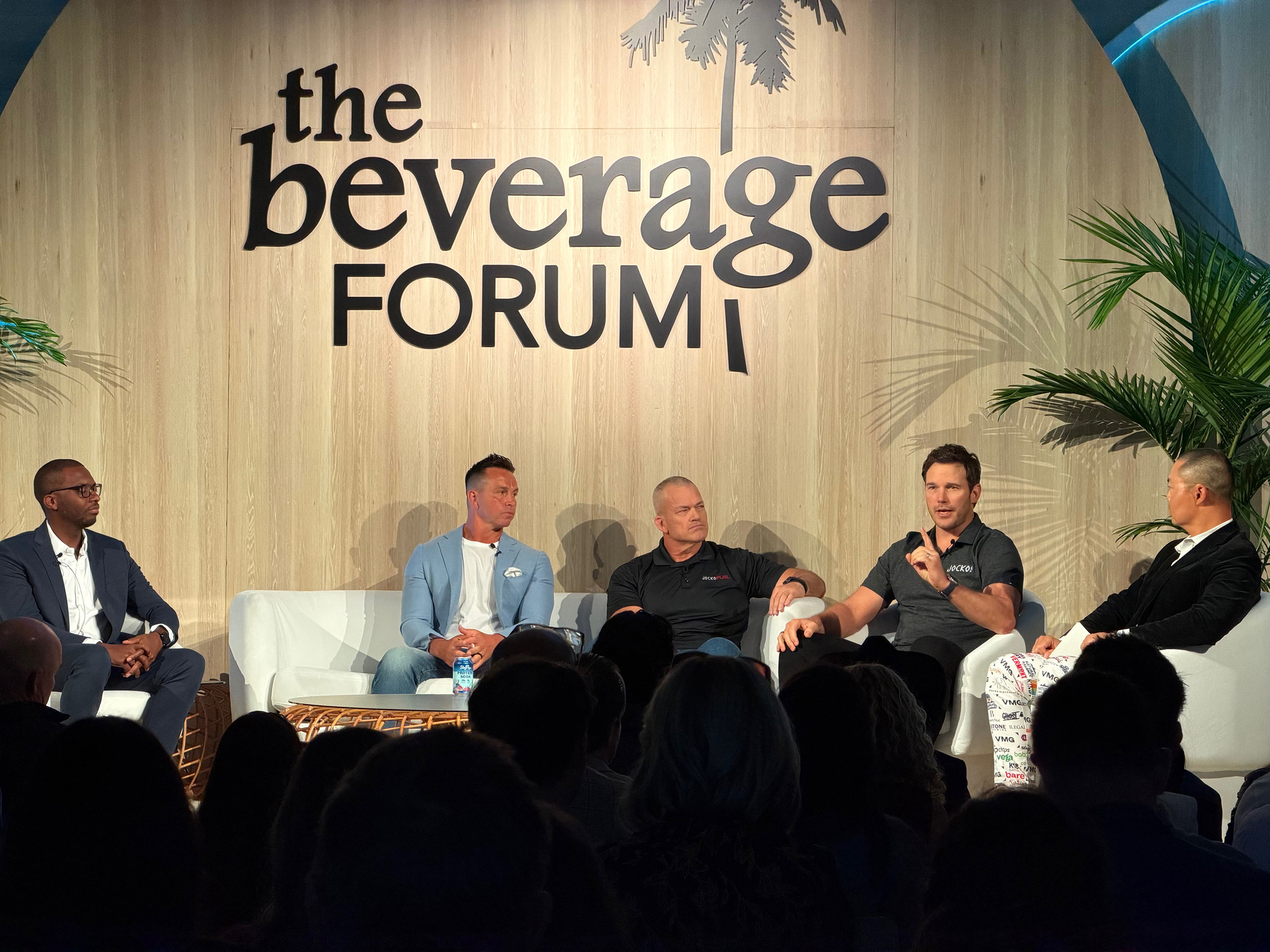
Walking the floor at Beverage Forum 2026, one pattern was impossible to miss. Nearly every brand badge was making some kind of functional claim, and not just in the categories you'd expect. Energy and hydration sure, but also soda (Poppi, Olipop), beer (Athletic Brewing, BERO), coffee (Chamberlain), water, juice. Celsius, Bloom, AG1, and BodyArmor anchored the performance and recovery side. On the periphery, a newer wave: Neutonic, Noot, Trip, INFUSD, building around nootropics, mood, and cognitive outcomes.
If you're not familiar with how the category is structured or where the market sits in 2026, start with our functional beverage category guide. This piece is the operator-level read for the three audiences that need to act on what the Forum surfaced.
What CPG Beverage Brands Heard at the Forum
If there was a single throughline across the brand-side panels, it was this: the consumer is no longer buying a beverage, they're buying an outcome. That has four practical implications.
The Outcome Economy is the new positioning starting line
We've covered this before, and heard it validated again at the Forum. Positioning in 2026 starts with the outcome, not the ingredient or the flavor. Poppi didn't win shelf because it tasted like soda. It won because it told a digestion-and-energy story that millennial parents could repeat to themselves at 4 p.m. Bloom's velocity at retail isn't really about greens powder. It's about a "feel better, look better" promise that resonates loudly enough to pull product through the cold vault.
The brands losing in functional right now lead with their hero ingredient ("now with X") and treat the outcome as a footnote. Consumers can't be sold on a molecule they've never heard of. They can be sold on what it does.
Health claims got harder, not easier
Multiple legal and regulatory conversations at the Forum flagged the same thing. Structure-function language is back under a microscope. The FDA's 2025 update to its "Healthy" definition restricts added sugars and sodium, pushing brands toward cleaner labels. The FTC's enforcement record on functional claims, and the increasingly aggressive plaintiff bar around "may support" claims, mean what your label can credibly say in 2026 is narrower than what was tolerated in 2022.
The practical upshot:
- Build your claim stack with regulatory review before you finalize packaging, not after.
- Document your evidence trail (clinical, observational, ingredient-level) so it survives a 30-day demand letter.
- Treat your influencer and DTC copy with the same rigor as your label. Plaintiff firms screen TikTok now.
Functional doesn't excuse bad liquid
This came up on more than one panel. The functional beverage graveyard is full of brands that nailed the positioning, raised the round, won the launch, and then died on the shelf because the second sip wasn't there. Repeat purchase still drives velocity. Velocity still drives distribution decisions. Distribution still drives every other number on your model.
If your liquid doesn't compete on taste with the best non-functional drink in its set, no claim stack saves you.
Non-alcoholic is converging with functional
Athletic Brewing, BERO, and the broader sober-curious cohort all shared a version of the same insight. Consumers aren't choosing non-alc instead of functional. They're choosing both, often in the same can. The fastest-growing zero-proof brands in 2026 aren't selling abstinence. They're selling an alternative outcome (relaxation, mood, hydration, even mild euphoria via adaptogens) that competes with alcohol on benefit, not on subtraction.
If you're a CPG beverage brand in either category and you're not at least mapping where your roadmap intersects this convergence, you're going to be late to it.
What Suppliers Need to Know
The supplier side of the category (ingredient houses, co-packers, packaging, flavor systems) is where a lot of the operational pressure shows up first.
Ingredient demand is shifting fast
The functional ingredient stack that mattered in 2022 (caffeine, B-vitamins, electrolytes) is baseline in 2026. The growth is in:
- Prebiotics (chicory root inulin, agave fiber), driven by the Poppi and Olipop wave and now the legacy soda response (Pepsi Prebiotic Cola, Coca-Cola's Simply Pop)
- Adaptogens (ashwagandha, rhodiola, reishi, lion's mane)
- Nootropics (L-theanine, alpha-GPC, citicoline, theacrine)
- Mood-targeted botanicals (saffron, lemon balm, chamomile)
- Functional mushrooms across both energy and calm positioning
- Plant-based proteins and collagen alternatives for recovery formats
Ingredient suppliers who can document clinical evidence, supply chain traceability, and consistent potency across batches will outsell suppliers who can't, regardless of price. Brands' regulatory exposure is now a sourcing requirement.
Co-packers are the underestimated bottleneck
Functional SKUs break a lot of standard fill lines. Cold-fill requirements for live cultures. Nitrogen-dosing for sensitive botanicals. Higher acid loads. Suspension challenges with insoluble fiber. Co-packers who can run functional formulations at small-to-mid scale, and who understand the QA implications of varied ingredient profiles, are in short supply and command a premium.
For brands, the line item that kills your launch isn't always your trade spend. Sometimes it's the eight-week wait for a co-packer slot.
Packaging is part of the functional story
Aluminum can volume in the functional category is growing at roughly 8.85 percent CAGR per Mordor, outpacing the broader beverage average. Cans deliver light protection (critical for sensitive ingredients), recyclability (a baseline expectation for the consumer this category targets), and the format flexibility brands need to differentiate at shelf. Ball Corporation and other can suppliers have built explicit programs to support emerging functional brands. The Pour Decisions episode on Ball's strategy is worth the listen if you're sourcing format decisions.
How Distributors Should Evaluate Functional Brands
The distributor-side conversation at the Forum was tighter than the brand-side one. Distributors are saying out loud what they've been saying privately for two years. The bar to earn truck space is higher than it's ever been, and "functional" alone isn't enough.
Functional alone doesn't earn a slot
Every distributor we spoke with had some version of the same complaint. The volume of functional brand pitches has tripled and the average quality hasn't moved. A unique benefit story matters less than three things: proven velocity in the doors a brand already has, a credible density story in the markets it's pitching, and a brand that can fund its own pull-through.
If a brand walks into a distributor pitch with a beautiful deck and no depletion data, the meeting is over before it starts.
What a distributor-ready pitch actually contains
Operators who land distribution in 2026 are showing up with:
- VIP or SPINS depletion data by SKU and account, ideally six-plus months of continuous trend
- Velocity benchmarks (units per store per week) that compare favorably to category peers (we published the benchmarks most distributors won't share)
- A density story, with proof the brand has saturated a defined market before pitching expansion
- Trade spend modeling that shows what the brand will spend per case to drive pull-through, not just push-through
- Retail authorization signal in the form of chain commitments or active conversations, not aspirations
Brands that show up with all five get meetings. Brands missing more than one don't.
Red flags from the other side of the table
The signals that get a functional brand rejected fast:
- DTC vanity metrics with no retail proof point
- Geographic over-extension (200 doors across 30 states with single-digit velocity in any of them)
- Over-reliance on influencer marketing as the velocity engine
- Founder-led pitches with no operations leader on the cap table
- A pricing model that requires constant promotion to move
The Shopra blog covers more on this in Speaking "Distributor" and the Three-Tier Relationship Audit.
Where the Category Is Headed
Three themes worth watching for the rest of 2026.
Stacking accelerates. Single-benefit functional drinks are giving way to multi-benefit SKUs. Energy plus focus. Calm plus mood. Hydration plus recovery. The challenge is keeping the outcome story crisp when the formulation gets complicated.
Big strategic M&A continues. PepsiCo bought Poppi. Coca-Cola launched Simply Pop. Keurig Dr Pepper, Constellation, and AB InBev all had senior leaders on the Forum stage and all have functional gaps to fill. Expect three to five more major acquisitions in the next 18 months.
Regulatory tightening continues. The FDA's new "Healthy" rule, FTC scrutiny of functional claims, and state-level action on certain ingredients (CBD, kratom, certain nootropics) will keep tightening the operating envelope. Brands that build compliance into product development from day one will outlast brands that retrofit it.
Closing
Functional is no longer a niche or a trend. It's the operating logic of modern beverage CPG. Brands need to build credibility around their outcome story before pitching for shelf. Suppliers need to position to serve the brands that will scale. Distributors need to filter aggressively, because the volume of pitches is up and the average quality isn't.
The brands, suppliers, and distributors who treat 2026 as the year functional became the default, not the differentiator, are the ones who'll still be on the shelf in 2028.


Is your data doing its job?
Lead with clarity.
We've built this infrastructure for leading beverage brands because we know that in the three-tier system, the only competitive advantage is the truth.
No credit card • No spreadsheets • One kickoff call
.webp)

